In This Article
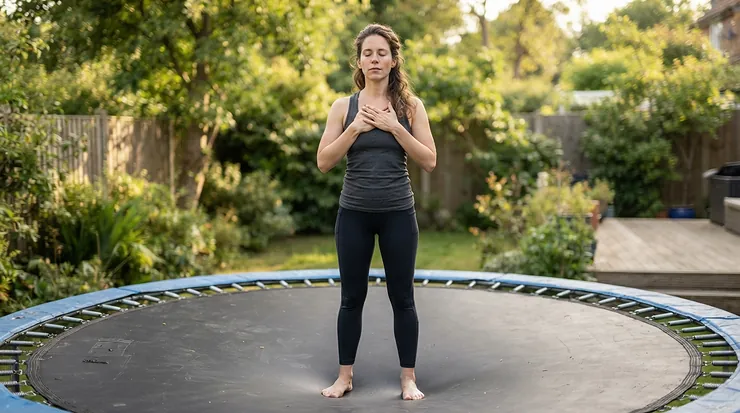
A rebounder for mental health & stress relief is a mini-trampoline used deliberately as a gentle, rhythmic, low-impact way to move your body, lift your mood and settle a busy mind. It isn’t medical treatment. It’s an accessible form of exercise that can support wellbeing alongside, never instead of, professional help.
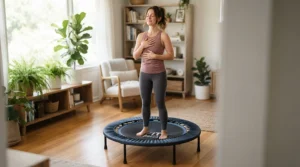
Picture the scene. It’s twenty to seven, the inbox is still pinging, and your shoulders have quietly migrated towards your ears. Ten minutes of gentle bouncing won’t fix your life, but it might unclench your jaw. That’s the real promise here: not a miracle, just a small, repeatable reset that fits between the kettle boiling and the washing going on.
Technically, this is rebound exercise, an elastic, low-impact style of movement descended from sports trampolines. It can be as gentle or as lively as you like. That flexibility is exactly why it suits stress relief. You can drift through a slow sway on a bad day and go full playground on a good one.
This guide compares seven rebounders that make sense for UK homes. It also unpacks how endorphins fit into the picture, how mindful movement turns bouncing into a proper reset, and where anxiety management realistically comes in.
A note on honesty before we start. I haven’t handled any of these machines. Everything below rests on spec comparisons and aggregated review themes, and I’ll flag it wherever the evidence runs thin.
Rebounder for Mental Health & Stress Relief: Quick Comparison Table
| Rebounder | Suspension | Listed max user weight | Folds? | Best For |
|---|---|---|---|---|
| MaXimus Pro Bungee Rebounder | Bungee | 150 kg | Folding legs | Quiet, noise-sensitive homes |
| FIT BOUNCE PRO II | Bungee | approx. 150 kg | Yes | Small flats needing storage |
| BCAN 48″ Foldable Mini Trampoline | Bungee | approx. 250 kg | Yes | Heavier or taller users |
| JumpSport 350 PRO | Bungee | Check listing | Check listing | Nervous beginners (handlebar) |
| Bellicon Classic | Bungee | Varies by bungee set | Check listing | Long-term premium buyers |
| MaXimus Bounce & Burn | Spring | 140 kg | Yes | Tighter budgets, firmer bounce |
| Boogie Bounce Studio | Spring | 127 kg | Yes | Guided, class-style routines |
Looking at the comparison above, the MaXimus Pro Bungee Rebounder and FIT BOUNCE PRO II are the quiet specialists, while the BCAN 48″ Foldable Mini Trampoline gives the most headroom for heavier users. The two spring models, MaXimus Bounce & Burn and Boogie Bounce Studio, trade some hush for a firmer, livelier bounce and, typically, a friendlier price. If silence is your priority, start with the bungee models. If budget is tighter, the springs deserve a look.
💬 Just one click — help others make better buying decisions too!😊
Top 7 Rebounders for Mental Health & Stress Relief: Expert Analysis
I’ve ordered these by how well they fit the stress-relief brief: quiet, stable, comfortable and easy to live with. Price bands are indicative only. Prices move constantly, so check current price before buying.
1. MaXimus Pro Bungee Rebounder — silent bounce for noise-sensitive homes
Quiet is the whole point when your goal is calm, and the MaXimus Pro Bungee Rebounder is built around it. Elastic bungee cords replace metal springs, so there’s no metallic twang interrupting an unwinding session.
The 150 kg rating suggests real headroom for most adults, and the folding-leg design lets it tuck flat or lean against a wall. That’s handy if your living room doubles as your office. The mat is on the snug side, so it suits steady bouncing, marching and gentle jogging better than sprawling dance routines.
Based on the spec comparison, this is the one for people whose stress is partly noise: flat-dwellers, shift workers, anyone with light sleepers nearby. It also reportedly bundles a workout membership, which tackles the “what do I actually do on this thing?” problem that quietly kills new habits.
Reviewer feedback summarised in UK roundups consistently praises the sturdy, near-silent bounce and easy assembly. The recurring gripes are the modest bounce area and the cost.
Pros:
- ✅ Near-silent bungee bounce suits shared walls
- ✅ Sturdy frame with a 150 kg rating
- ✅ Bundled workouts remove beginner guesswork
Cons:
- ❌ Mat feels snug for big movements
- ❌ Costs more than most rivals
Indicative price: £200–£300 range. Verdict: worth the premium if quiet and joint comfort top your list.
2. FIT BOUNCE PRO II — foldable bungee bounce for small flats
Space is a mental-health issue too. A rebounder that lives permanently mid-room becomes clutter, and clutter nags. The FIT BOUNCE PRO II folds away, comes with a storage bag, and still uses bungee cords rather than springs.
The rating of roughly 150 kg (about 23½ stone) is generous. Bungee suspension tends to give the soft, cushioned landing that makes slow bouncing feel more like floating than exercising.
On paper, this is the sensible middle path between the fixed-frame quiet of the MaXimus Pro Bungee Rebounder and the compact storage of spring folders. It suits anyone who wants to unfold, bounce for ten minutes and make the evidence disappear. “Mini” does mean mini, though. Reviewers note the mat is modest, so big arm-swinging routines may feel cramped.
Aggregated review themes praise easy assembly, robust build and a quiet bounce. The recurring negatives are price and occasional bungee slippage when the unit is folded for storage.
Pros:
- ✅ Folds away with an included storage bag
- ✅ Quiet bungee bounce for shared walls
- ✅ Robust build for its weight rating
Cons:
- ❌ Compact mat limits large movements
- ❌ Bungees can slip when stored
Indicative price: £150–£250 range. Verdict: good value if storage is your main constraint.
3. BCAN 48″ Foldable Mini Trampoline — most generous weight rating and mat space
Not every body, or every home, suits a compact mini. The BCAN 48″ Foldable Mini Trampoline is the roomy option. It uses a bungee system, and the 48-inch version is listed at up to 550 lb (roughly 250 kg).
That headroom isn’t only for heavier users. It signals a sturdier frame, and it means lighter users never push the machine near its limit. A bigger mat also builds confidence. If you’re tensing against the fear of stepping off the edge, you’re undermining the very relaxation you bought it for.
My reading of the spec: this suits heavier or taller users, or anyone who wants room for side-steps and gentle twists. It still folds for storage.
Reviewer themes describe a joint-friendly bounce, a secure feel and a non-slip base. The main complaints are fiddly assembly and a few reports of missing pre-installed bungee cords, so check the contents on delivery.
Pros:
- ✅ Highest listed weight rating on this list
- ✅ Large mat boosts balance confidence
- ✅ Joint-friendly bungee bounce
Cons:
- ❌ Assembly can be fiddly
- ❌ Some buyers report missing bungees
Indicative price: £100–£200 range. Verdict: strong value, especially for larger frames, provided you check the box contents promptly.
4. JumpSport 350 PRO — mid-premium bungee with a stabilising handlebar
The JumpSport 350 PRO is a 39-inch bungee rebounder with a handlebar, described in roundups as a mid-premium pick that sits well below the top-tier price point. Its patented EnduroLast cord system is designed to give a smooth, low-impact landing.
The handlebar is the underrated feature for stress relief. Wobble triggers worry, and worry is the opposite of what you’re after. Holding on while you build trust in the bounce lets nervous beginners relax into the rhythm. Reviewers also describe the legs as stable.
Here’s what the spec sheet won’t tell you, but reviewers note: a reassuringly steady frame often matters more to long-term use than extra mat space. People who feel safe keep bouncing.
Roundup reviewers describe the bounce as smooth and the build as sturdy. The negatives are the cost and thinner UK retail availability than budget brands, so confirm stock on amazon.co.uk.
Pros:
- ✅ Smooth bungee bounce with joint-gentle landings
- ✅ Handlebar steadies nervous first-timers
- ✅ Established rebounder-specialist brand
Cons:
- ❌ Pricier than most budget options
- ❌ UK stock can be patchy
Indicative price: £250–£350 range. Verdict: a sensible step up if confidence and comfort matter more than bargain-hunting.
5. Bellicon Classic — the premium benchmark for bounce feel
The Bellicon Classic is the rebounder others get measured against. It’s a bungee design handmade in Germany, with five bungee strength levels so you can tune the bounce to your weight and preference. Larger sizes, including 49 inches, are available.
That tunability is the real spec story. A softer set for gentle recovery days and a firmer one for energetic sessions means one machine can follow your mood. I’d argue a bounce that feels tailored is more likely to survive past week three.
Premium brands like this are often sold direct or through specialist retailers rather than Amazon, so listings on amazon.co.uk may be limited. Check availability first.
Roundup and retailer commentary consistently calls it the benchmark for smoothness and build quality. Note that many of those retailers sell it, so treat the enthusiasm with healthy scepticism. The near-universal drawback is price.
Pros:
- ✅ Adjustable bungee strength for every mood
- ✅ Premium build and refined bounce
- ✅ Larger 49-inch size available
Cons:
- ❌ Highest price on this list
- ❌ Often not sold through Amazon
Indicative price: £400+ range. Verdict: an illustrative £500 outlay used five times a week for three years works out at roughly 64p a session. That’s reasonable only if you’ll truly stick with it.
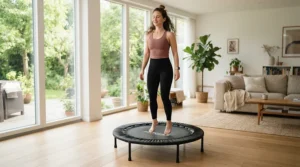
6. MaXimus Bounce & Burn — budget-friendlier folding spring option
Not everyone wants floaty calm. Some people unwind by sweating, and the MaXimus Bounce & Burn leans that way. It’s a spring-based, foldable rebounder with an adjustable handlebar, rated to 140 kg, with spare parts and a warranty reportedly available.
Springs generally give a firmer, more energetic bounce than bungee cords. That suits a “burn off the day” session more than a “float through the evening” one. The trade-off is noise. Springs can squeak, and owners should expect to keep the frame tidy and the cover padding in good order.
My take: choose this if budget matters, your neighbours are far away, and you’d rather feel your heart rate climb than drift.
Reviewer themes describe a sturdy, low-impact, enjoyable workout. The complaints are awkward folding, assembly that can feel like a puzzle, and a few reports of squeaks that persisted.
Pros:
- ✅ Adjustable handlebar aids balance
- ✅ Folds away for storage
- ✅ Spare parts and warranty reportedly available
Cons:
- ❌ Some owners report persistent squeaks
- ❌ Folding can be awkward
Indicative price: £80–£150 range. Verdict: a decent entry point if you accept a bit more noise.
7. Boogie Bounce Studio — class-style routines on a spring frame
Structure is underrated medicine for a busy head. The Boogie Bounce Studio is a spring-based, foldable rebounder designed with rebounder-class routines in mind, supported by app-based workouts.
It’s rated to 127 kg (20 stone) and folds for storage. For anxious or overloaded people, guided routines remove decision fatigue. You press play and follow along rather than negotiating with yourself about what to do.
Analytically, it’s the best fit for people who like being told what to do for twenty minutes. It’s less ideal if you want pure silence or room to improvise.
Reviewer themes mention a sturdy build, quiet springs, quick setup and helpful customer service. Reported negatives include a handle that can rattle, app and accessory setup frustrations, and a small number of reports of bruising from the springs. Keep the spring padding properly in place.
Pros:
- ✅ Class-style guided routines reduce decision fatigue
- ✅ Springs described as quiet by reviewers
- ✅ Folds for storage
Cons:
- ❌ Handle can rattle during use
- ❌ Some reports of spring-related bruising
Indicative price: £100–£200 range. Verdict: good if guidance keeps you consistent, and worth checking recent reviews on the app side.
Top 7 at a Glance: Price Bands and Value
| Rebounder | Suspension | Indicative price band | Review themes | Best For |
|---|---|---|---|---|
| MaXimus Pro Bungee Rebounder | Bungee | £200–£300 | Quiet, sturdy; snug mat | Silence seekers |
| FIT BOUNCE PRO II | Bungee | £150–£250 | Robust, quiet; bungee slippage | Small flats |
| BCAN 48″ Foldable Mini Trampoline | Bungee | £100–£200 | Joint-friendly; fiddly assembly | Heavier users |
| JumpSport 350 PRO | Bungee | £250–£350 | Smooth, stable; pricey | Anxious beginners |
| Bellicon Classic | Bungee | £400+ | Benchmark feel; very pricey | Long-term buyers |
| MaXimus Bounce & Burn | Spring | £80–£150 | Sturdy; squeaks, awkward fold | Tight budgets |
| Boogie Bounce Studio | Spring | £100–£200 | Quiet springs; app quirks | Guided routines |
Value is not simply “cheapest wins.” The BCAN 48″ Foldable Mini Trampoline looks like the strongest cost-per-comfort deal for larger frames, while the MaXimus Bounce & Burn wins on pure entry price. Pay more for the JumpSport 350 PRO or Bellicon Classic only if you’ll bounce several times a week for years, because that’s when a smoother, tunable bounce earns its keep.
✨ Ready to Find Your Bounce?
🔍 Click any highlighted product to check current pricing and availability on Amazon. Pick the one that fits your space, your budget and your nerves, then start with just ten minutes tonight. 🧘♀️
A Calm 10-Minute Routine: Rebounder for Mental Health & Stress Relief in Practice
Equipment only matters if it gets used, so here’s the part no product listing gives you. Mind makes the point that you’re far likelier to keep going with an activity you actually enjoy than one you force yourself through. So design for enjoyment first.
Set-up: Place the rebounder on a flat, firm floor, with clear space around it and away from walls and furniture. Check the legs and cords are secure. If you’re new to this, keep a hand near the handlebar if one is fitted. Some people feel a little dizzy or lightheaded in the first few sessions, so start gently.
The routine:
- Minutes 0–2: gentle health bounce. Feet stay on the mat and knees stay soft. Think “rocking”, not “jumping”.
- Minutes 2–5: slow march or light jog. Breathe in for four steps, out for four.
- Minutes 5–7: side-to-side sway. Let your arms swing loosely.
- Minutes 7–9: taper down. Smaller bounces, slower breath.
- Minute 10: stand still. Notice your feet, your breathing and your jaw.
Common mistakes in the first 30 days:
- Bouncing too high, too soon.
- Going long on day one, then quitting by day four.
- Exercising straight after a big meal.
- Skipping the taper-down.
- Leaving the rebounder folded in a cupboard where the habit goes to die.
Pick a fixed cue, such as “after I make tea”, and keep it there.
Real-World Scenarios: Which Rebounder Suits Your Life?
These are hypothetical profiles built to show how the specs map onto real constraints. They are not testimonials.
The flat-dweller with thin walls. Budget is around £250, space is tight, bouncing happens at 7am before work, three or four times a week. The priority is silence and storage. The FIT BOUNCE PRO II fits best, with its bungee quiet and storage bag. The MaXimus Pro Bungee Rebounder is the alternative if the budget stretches and folding matters less.
The home-worker who needs a break. Budget is under £150, there’s a spare corner, and this person wants short, daily “pressure valve” bursts between calls. Prioritise value and a handlebar. The BCAN 48″ Foldable Mini Trampoline gives roomy, secure bounce space, while the MaXimus Bounce & Burn is the lower-cost spring route if noise isn’t an issue.
The returner with a confidence wobble. Budget is flexible, the home is quiet, and this person hasn’t exercised in months and feels nervous about balance. The JumpSport 350 PRO and its handlebar are the reassuring choice. The Boogie Bounce Studio suits if guided classes help them stay consistent.
In each case, the same rule holds: buy for the constraint that would otherwise stop you using it.
How to Choose a Rebounder for Mental Health & Stress Relief
The best rebounder for mental health & stress relief is the one that makes starting effortless and quitting pointless. Work through these six steps:
- Choose your suspension. Bungee is softer and quieter, which suits unwinding. Springs are firmer and livelier, which suits “burn it off” sessions.
- Check the weight rating with headroom. Don’t buy at the limit. A comfortable margin usually means a sturdier frame.
- Judge the footprint honestly. Measure the space you’ll actually use, then add clearance around the mat.
- Decide on a handlebar. If balance worries you, it’s well worth having. Worry defeats relaxation.
- Think about noise and neighbours. Bungee wins here, and it matters more in flats.
- Plan how you’ll use it. If guidance helps you stick with it, look for bundled workouts. If storage is your barrier, buy a folder.
Where applicable, also look for CE or UKCA marking on the product.
Features That Actually Matter (And Those That Don’t)
Matter: a stable leg design, a decent weight rating, a quiet bounce, a handlebar if you’re nervous, and padding that covers springs or cords. These are the features that decide whether you feel safe, and feeling safe is what allows you to relax.
Don’t matter much: step counters, flashy displays, and any subscription that isn’t free to cancel. For a stress-relief goal, a simple frame you trust beats a gadget-laden one every time.
Treat sweeping marketing claims with caution as well, such as “detox” promises or dramatic “cell-level” benefits. None of them is needed to justify a rebounder for mental health & stress relief, and none changes how well a machine suits you. The honest case is simpler: it’s enjoyable, gentle on joints compared with many land exercises, and easy to do in short bursts.
Finally, ignore bounce-height bragging. Higher isn’t better here. A low, rhythmic bounce is the calming one.
Endorphins and Exercise: What a Rebounder Can (and Can’t) Promise
Endorphins are the body’s natural chemical messengers, long associated with that post-exercise lift. It’s tempting to say “bounce, release endorphins, feel better” and leave it there. The reality is subtler. Researchers continue to debate how much of exercise’s mood effect comes from endorphins versus other mechanisms, so treat them as one part of a bigger picture.
Here’s where a rebounder genuinely helps. Studies discussed in rebounding coverage suggest people find it fun and rate it as less strenuous than the intensity warrants. Easier effort plus enjoyment means you’re likelier to keep going long enough to feel any lift. Even 15 to 20 minutes can be enough to start benefiting, according to Healthline-style guidance.
The Compendium of Physical Activities reportedly lists rebounding-style jogging at around 4.5 METs, in the same territory as brisk walking. That makes it a moderate, achievable workload for most people.
One caution: don’t chase the high. If you start bouncing compulsively, or exercise stops feeling like relief and starts feeling like an obligation, that’s a signal to step back.
Mindful Movement on a Rebounder: Turning Bouncing Into a Reset
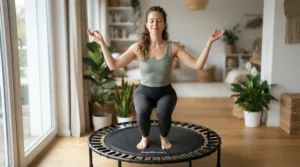
Mindful movement means paying deliberate, non-judgemental attention to what your body is doing right now. A rebounder is oddly good for it. The surface moves back, so your balance system has to stay quietly alert. You can’t doomscroll and bounce at the same time. Your attention gets pulled into your feet.
Try a three-point check each session:
- Feet. Feel the mat give and return.
- Breath. Match breathing to the rhythm.
- Jaw and shoulders. Release them on each exhale.
Fix your gaze on a still point, such as a plant or a spot on the wall, and leave the phone in another room. This isn’t formal mindfulness training. It’s a practical, body-led way to interrupt rumination, and it pairs naturally with short sessions. If you’ve struggled with seated meditation, moving versions are often easier to stick with.
For this style of practice, the quiet bungee models, especially the MaXimus Pro Bungee Rebounder and FIT BOUNCE PRO II, make the most sense, because the soundtrack stays soft enough to hear your own breathing.
Anxiety Management on a Rebounder: Realistic Expectations
Let’s be straight about anxiety management: a rebounder is a helpful tool, not a treatment. Many people find physical activity supports their mental health on its own or alongside other treatments. That’s the careful claim, and it’s the one worth making.
A few practical points:
- Use it as a pressure valve. A short, gentle session before a stressful meeting or after a tense day can take the edge off.
- Start gently if you’re panic-prone. A raised heart rate can feel similar to anxiety symptoms, so build intensity gradually and keep the handlebar nearby.
- Pair it with other supports. Sleep, social contact and professional help matter.
- Don’t treat it as a cure. If anxiety is persistent or interferes with daily life, speak to your GP. In England, you can also self-refer to NHS Talking Therapies.
The JumpSport 350 PRO and Boogie Bounce Studio suit people who feel safer with a handlebar or guided structure. The point of any machine here is to reduce friction, not to promise outcomes.
Bungee vs Spring: Which Is Better for Stress Relief?
For most people chasing calm, bungee is the better fit. Elastic cords deliver a softer, quieter, more cushioned landing, which suits slow, rhythmic movement. That’s why the MaXimus Pro Bungee Rebounder, FIT BOUNCE PRO II, BCAN 48″ Foldable Mini Trampoline, JumpSport 350 PRO and Bellicon Classic all lean this way.
Springs offer a firmer, livelier bounce and typically a lower entry price. That’s the appeal of the MaXimus Bounce & Burn and Boogie Bounce Studio. The trade-offs are more noise and the need to keep padding properly in place.
Durability cuts both ways. Bungee cords can wear and may need replacing, while springs tend to last but can squeak. Neither is “maintenance free”, so check parts availability before you commit.
If you live in a flat, share walls or want a meditative feel, go bungee. If budget is the main constraint and you don’t mind a bit of noise, springs are a legitimate option. Either way, don’t skimp on stability.
Rebounder vs Walking, Yoga and Running for Stress Relief
| Option | Joint impact | Noise | Space needed | Best For |
|---|---|---|---|---|
| Rebounder (e.g. FIT BOUNCE PRO II) | Low | Low (bungee) | Small | Short, rainy-day resets |
| Brisk walking | Low | None | Outdoors | Fresh air and daylight |
| Home yoga | Low | None | Small | Flexibility and slow breath |
| Running | Higher | None | Outdoors | Intense, time-efficient cardio |
None of these is “better” in the abstract. A rebounder’s edge is convenience. It’s weatherproof, nearly silent in bungee form, and lets you reset in ten minutes without leaving the house. Walking wins for daylight and fresh air, yoga for slow flexibility, and running for intensity. The smartest plan often combines two.
For context, the NHS guidelines for adults aged 19 to 64 suggest at least 150 minutes of moderate activity, or 75 minutes of vigorous activity, each week, plus strength work on two days. The NHS lists dancing as moderate and skipping as vigorous. Rebounding isn’t named, so where it falls depends on your effort. That’s a judgement call rather than an official classification.
Safety First: Who Should Check Before Bouncing
Rebounding is gentler on joints than many land exercises, but it isn’t risk-free.
Speak to a GP or physiotherapist first if you’re pregnant or postnatal, recovering from surgery, living with heart, joint or balance problems, or experiencing dizziness. Mind also notes that physical activity can have a negative effect for some people, for example if you have an eating problem or tend to over-train. If that sounds familiar, speak to a professional before building exercise into your routine.
Practical safety checks:
- Stay within the weight rating, with a margin.
- Inspect cords or springs and legs regularly.
- Keep padding in place.
- Supervise children, because many adult rebounders aren’t designed for them.
- Never bounce somewhere with low ceilings or fragile furniture nearby.
If you’re struggling right now, you don’t have to cope alone. Samaritans are available free on 116 123, any time. A rebounder can sit alongside support. It shouldn’t replace it.
Frequently Asked Questions
❓ How long should I use a rebounder for stress relief each day?
❓ Is a bungee rebounder better than a spring one for anxiety?
❓ Can a rebounder replace therapy or medication?
❓ What size rebounder is best for a small flat?
❓ Is a rebounder quiet enough for upstairs flats?
Conclusion
A rebounder for mental health & stress relief won’t rewrite your week, but it might give you something rarer than a miracle: a ten-minute, repeatable, genuinely enjoyable reset. The best choice depends on your constraints rather than a headline spec.
If quiet matters most, the MaXimus Pro Bungee Rebounder and FIT BOUNCE PRO II are strong bungee options. If you need room and a high weight rating, the BCAN 48″ Foldable Mini Trampoline stands out. The JumpSport 350 PRO is the reassuring step up for nervous beginners, and the Bellicon Classic is the premium benchmark if you’ll commit for years. On a tighter budget, the MaXimus Bounce & Burn and Boogie Bounce Studio put spring-based options in reach.
Whichever you choose, keep expectations honest. Endorphins are part of the story, mindful movement makes it richer, and anxiety management always works best with proper support alongside. Start small, keep it enjoyable, and check with a professional if you have health concerns.
Recommended for You
- Rebounder For Bone Density Support: 7 Smart Picks (2026)
- Low-Impact Rebounder For Bad Knees: 7 Best Picks For UK Homes (2026)
- Rebounder Vs Skipping Rope For Fitness: 7 Best Buys (2026)
Disclaimer: This article contains affiliate links. As an Amazon Associate, I earn from qualifying purchases. If you purchase products through these links, we may earn a small commission at no additional cost to you.
✨ Found this helpful? Share it with your friends! 💬🤗
