In This Article
Stand in front of a bellicon rebounder and a £40 supermarket trampoline side by side, and on paper they look almost insulting to compare — a circle of fabric stretched over a metal ring, twice, at wildly different prices. Bounce on them back to back, though, and the story changes completely. One gives you a soft, silent, almost weightless lift. The other clangs, creaks, and occasionally pinches your ankle if you land wrong. That gap is exactly what this guide is about.
A bellicon vs standard rebounder decision isn’t really about brand snobbery — it’s about bungee versus spring engineering, frame tolerance, and how your knees will feel after 40 sessions rather than four. We’ve dug into seven real, currently available rebounders sold in the UK — from sub-£50 folding units to the German-built bellicon Classic — and broken down what the spec sheets actually mean once you’re the one bouncing. Whether you’re chasing low-impact cardio, rehab-friendly movement, or just a quieter alternative to your neighbour’s treadmill, you’ll leave this article knowing exactly which category of rebounder fits your body, budget and floor space.
According to NHS physical activity guidelines, most UK adults should aim for at least 150 minutes of moderate activity a week, and rebounding — done consistently — is one of the more forgiving ways to hit that target without hammering your joints.
What Is a Bellicon vs Standard Rebounder?
A bellicon is a German-engineered fitness trampoline that uses patented elastic bungee cords instead of metal springs, giving a quieter, more joint-friendly bounce. A “standard rebounder” is a broader category — usually spring-loaded or budget bungee-style mini trampolines — that trade some bounce quality and durability for a lower price.
Quick Comparison Table
| Rebounder | Suspension Type | Price Range | Best For |
|---|---|---|---|
| bellicon Classic 44″ | Bungee (5-strength) | £700-£900 range | Serious daily rebounders wanting German engineering |
| bellicon Premium T-Bar | Bungee + handle | £950-£1,100 range | Buyers wanting stability support built in |
| JumpSport 250 | Bungee | £300-£380 range | Bellicon-curious buyers on a tighter budget |
| MaXimus Fit Bounce Pro II | Bungee | £280-£350 range | Apartment dwellers, rehab and joint-pain users |
| MaXimus PRO | Spring | £150-£220 range | All-in-one home gym seekers on a mid budget |
| Kanchimi Folding Rebounder | Spring/bungee hybrid | £60-£100 range | Budget buyers who still want fold-flat storage |
| HOMCOM 40″ Foldable | Spring | Under £50 | First-timers testing whether rebounding suits them |
Looking at the table, the price gap between HOMCOM 40″ Foldable and bellicon Premium T-Bar is roughly twenty-fold, yet both technically qualify as “rebounders” — which tells you the category is less about what it is and more about how it’s built. If you’re unsure whether you’ll stick with rebounding, the Kanchimi Folding Rebounder or MaXimus PRO sit in a sensible middle ground that won’t punish you financially for changing your mind. Buyers who already know they want the smoothest possible bounce, or who have joint issues that rule out anything jarring, will find the extra spend on a bellicon Classic 44″ justified within the first few sessions.
💬 Just one click — help others make better buying decisions too!😊
Top 7 Rebounders: Expert Analysis
1. bellicon Classic 44″ — the benchmark German-built bungee rebounder
The bellicon Classic 44″ is the model most people picture when they hear the word “bellicon,” and it’s the one every other rebounder in this list gets measured against.
Its frame is black powder-coated steel wrapped around a Polypropylene mat, but the real story is the suspension: instead of springs, you get rubber bungee cords available in five strength tiers — soft, medium, strong, extra-strong and ultra — selected by body weight rather than a one-size-fits-all setting. Based on the spec comparison, that weight-matched bungee system is what separates the bellicon Classic 44″ from almost everything else here; a 60kg user and a 110kg user get genuinely different bounce feel rather than the same spring fighting two very different loads. It’s built in Germany to what the brand calls Swiss-influenced engineering standards, and the frame is designed to be serviceable rather than disposable — bungees can be swapped individually as they age, instead of retiring the whole trampoline.
Reviewers consistently note the bounce as noticeably quieter and “slower” feeling than spring rebounders — more of a slingshot lift than a snap — which people either love immediately or need a session or two to adjust to. Aggregated feedback also flags the sheer number of customisation options (three frame sizes, five bungee strengths, multiple leg and mat configurations) as both a strength and a source of decision fatigue at checkout.
Pros:
- ✅ Weight-matched bungee strength tuned to your body, not guessed
- ✅ Noticeably quieter bounce than any spring-based rebounder here
- ✅ Individually replaceable bungees extend the trampoline’s working life
Cons:
- ❌ Smaller bounce surface than spring-loaded rivals of a similar frame size
- ❌ Among the priciest options in this entire roundup
At around £700-£900, the bellicon Classic 44″ isn’t an impulse buy, but for anyone rebounding four or five times a week for the long haul, the cost-per-session maths starts to look generous within a year or two.
2. bellicon Premium T-Bar — for buyers who want built-in stability support
The bellicon Premium T-Bar takes the Classic’s bungee system and frame quality and bolts on a detachable T-bar handle, aimed squarely at people who want a confident grip while they find their balance.
What most buyers overlook about this model is that the handle isn’t just a beginner crutch — it’s genuinely useful for interval training, since you can push against it during faster bounces to keep form tight without wobbling off-centre. The frame otherwise mirrors the Classic’s screw-leg or folding-leg construction and standard mat, and it’s available across the same 39″, 44″ and 49″ size range, so taller users or anyone wanting more lateral room to step side-to-side can size up without changing the core bungee technology.
What the spec sheet won’t tell you, but user reports suggest, is that the T-bar attaches and detaches in seconds — useful if you want support during a rehab phase but plan to remove it once your balance improves. Reviewers who bought it for physiotherapy or post-injury use describe it as reassuring rather than restrictive, letting them bounce sooner than they would have felt safe doing unsupported.
Pros:
- ✅ Detachable T-bar gives confidence without permanently limiting movement
- ✅ Same weight-matched bungee strengths as the standard Classic range
- ✅ Available in three frame sizes for different body types and spaces
Cons:
- ❌ Sits at the top of the price range covered in this article
- ❌ The handle adds bulk that makes storage slightly less compact
Sitting around £950-£1,100, the bellicon Premium T-Bar is best treated as a rehabilitation or confidence-building investment rather than a first rebounder for someone who’s never tried the category.
3. JumpSport 250 — the closest bungee rival to bellicon for less money
The JumpSport 250 is the American-engineered bungee rebounder that gets mentioned in the same breath as bellicon more often than any other model on this list, and it earns that comparison.
Its 39-inch frame uses 30 EnduroLast2 elastic cords rated for roughly a million bounce cycles, mounted on six arched steel legs for a wider stance than most folding rivals. Key specs with real-world meaning: the cords sit mostly hidden beneath a padded skirt, which means more usable jumping surface and less risk of a foot slipping between exposed bungees during energetic side-steps. Based on the spec comparison, the JumpSport 250 trades bellicon’s adjustable-by-weight bungee system for a fixed set-up tuned for a broad range of users, which keeps costs down but removes some of that fine-tuned personalisation.
Aggregated review sentiment across US retail platforms is strongly positive, with recurring praise for the quiet bounce and sturdy, non-wobbly frame; some buyers who compared it directly to premium rebounders noted it felt “a little more basic” in bounce depth but didn’t consider the difference worth several hundred extra pounds. Because it’s primarily sold and shipped from the US, UK buyers should factor in import costs and potentially longer delivery windows.
Pros:
- ✅ Bungee cords rated for roughly a million bounce cycles
- ✅ Wide arched-leg stance adds stability during dynamic movement
- ✅ Padded skirt covers most cords, reducing pinch risk
Cons:
- ❌ No weight-tiered bungee customisation like bellicon offers
- ❌ Importing to the UK can add cost and delivery time
Priced in the £300-£380 range once shipping is factored in, the JumpSport 250 is a genuinely strong middle path for anyone who wants bellicon-style bounce quality without the bellicon-style invoice.
4. MaXimus Fit Bounce Pro II — the British-built standard bungee rebounder
The MaXimus Fit Bounce Pro II comes from Windsor-based Maximus Life Ltd, trading as Rebound Fitness, and it’s arguably the most talked-about “standard” rebounder in the UK market specifically because it’s so often compared to bellicon.
Its 99cm frame houses a 66cm bouncing mat supported by 60 bungee connectors — roughly double what you’ll find on many budget rivals — which the brand markets as its strongest suspension system yet. Here’s what to weigh: with a 150kg maximum user weight and a frame weighing just 10kg, it’s genuinely portable, and the half-fold design means it slides under most beds without a fight. The bungee count matters more than it might sound; more connectors generally spread load more evenly across the mat, which translates into a steadier, more predictable landing zone rather than a soft centre and firm edges.
Reviewers consistently report that it sits “a fraction of the cost of a bellicon, better specced than most budget rebounders on Amazon” — which lines up with independent testing that placed it ahead of similarly priced spring rebounders on quietness and joint comfort. The three-year mat warranty is also frequently cited as reassurance for buyers nervous about long-term durability at this price point.
Pros:
- ✅ 60 bungee connectors — roughly double many rival budget models
- ✅ Half-folds for easy under-bed or cupboard storage
- ✅ Backed by a three-year mat warranty from a UK-based company
Cons:
- ❌ Smaller bounce surface than the frame size might suggest
- ❌ Optional handlebar and accessories cost extra on top
At roughly £280-£350, the MaXimus Fit Bounce Pro II is the pick for buyers who want bellicon-adjacent bounce quality but simply can’t justify a four-figure spend.
5. MaXimus PRO — the spring-based standard rebounder built as a home gym
The MaXimus PRO swaps bungees for giant coiled springs, positioning it as the more athlete-focused, higher-tension sibling to the Fit Bounce Pro II rather than a direct bellicon rival.
It shares the same 99cm frame and 66cm mat dimensions, plus a 150kg weight capacity, but the spring-loaded legs and quarter-fold design trade a touch of quietness for a firmer, snappier bounce that suits HIIT-style training better than gentle rehab bouncing. Key specs with real-world meaning: it ships with a handlebar, resistance bands and sand weights, effectively bundling a compact strength-training kit alongside the cardio equipment, which is unusual at this price tier. Non-marking rubber feet and double cross-stitched matting round out a build that independent UK reviewers have rated as comparable in quality to the Fit Bounce Pro II, just noisier in use.
Aggregated sentiment describes it as one of the more complete “all-in-one home gym” packages in the budget-to-mid bracket, with the resistance band attachments singled out as a genuinely useful extra rather than a marketing afterthought. A recurring, honestly-reported drawback is that spring-based bounce is inherently louder than bungee, so flat or apartment dwellers with downstairs neighbours may want to test tolerance before committing to daily early-morning sessions.
Pros:
- ✅ Bundled resistance bands and sand weights add strength training
- ✅ Quarter-fold design stores smaller than half-fold rivals
- ✅ 150kg weight capacity matches pricier bungee competitors
Cons:
- ❌ Noticeably louder than any bungee model in this list
- ❌ Springs generally feel harsher on ageing or sensitive joints
Priced around £150-£220, the MaXimus PRO earns its place as the value pick for anyone prioritising a complete home-workout bundle over silence.
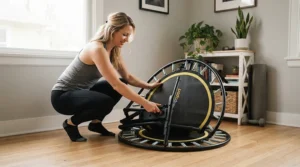
6. Kanchimi Folding Rebounder — a budget pick that borrows premium cues
The Kanchimi Folding Rebounder sits in the tricky “cheap but not nasty” zone, aiming to mimic the fold-flat convenience of pricier rebounders without matching their price tag.
It doesn’t reach the build quality of the MaXimus range, and that’s worth saying plainly rather than glossing over — the frame gauge and mat tension are noticeably lighter-duty once you’ve bounced on something like the Fit Bounce Pro II for comparison. What most buyers overlook, though, is that for genuinely casual or occasional use — a few sessions a week rather than a daily habit — that lighter build isn’t necessarily a dealbreaker, and the folding mechanism is still practical for anyone in a flat-share or small home without dedicated gym space.
Honest analysis here matters more than most product mentions in this list: this is a rebounder to buy if you’re testing whether the format suits you at all, not one to buy expecting bellicon-grade longevity. Reviewers comparing budget folding rebounders generally note that models in this bracket tend to develop mat sag or squeaking springs faster than premium alternatives, so treating it as a two-to-three-year trial unit rather than a decade-long investment sets realistic expectations.
Pros:
- ✅ Genuinely portable folding design for small UK homes
- ✅ Low upfront cost lowers the barrier to trying rebounding
- ✅ Mimics premium styling cues at a fraction of the price
Cons:
- ❌ Build quality noticeably below mid-range bungee rebounders
- ❌ Likely to need replacing sooner under frequent daily use
At around £60-£100, the Kanchimi Folding Rebounder works best as a low-risk trial before committing to a pricier long-term rebounder like the MaXimus Fit Bounce Pro II.
7. HOMCOM 40″ Foldable Mini Trampoline — the cheapest realistic starting point
The HOMCOM 40″ Foldable Mini Trampoline is about as entry-level as rebounders get while still being a purpose-built fitness product rather than a children’s toy repurposed for adult use.
Its steel frame supports up to 150kg on the foldable version, with an adjustable foam handle running from roughly 92cm to 132cm depending on the exact listing, and a removable padded edge designed to stop feet slipping between the spring or bungee-style connectors during vigorous sessions. Key specs with real-world meaning: the oxford fabric used on the mat surround is UV and fade resistant, which matters if you intend to use it outdoors in the garden as well as indoors, something several of the pricier bungee models in this list aren’t really designed for.
Aggregated feedback across UK retailers is generally positive for the price bracket, with buyers repeatedly describing it as “does what it says” for light, occasional use — walking on the spot while watching television, gentle balance work, or introducing children to controlled bouncing under supervision. The honest trade-off, consistently flagged in reviews, is a smaller 100kg weight capacity on some non-foldable variants and a noticeably firmer, springier bounce than anything bungee-based here.
Pros:
- ✅ Genuinely low entry price for a purpose-built rebounder
- ✅ UV-resistant fabric suits occasional outdoor use too
- ✅ Adjustable handle offers real balance support for beginners
Cons:
- ❌ Weight capacity limited on several standard (non-foldable) variants
- ❌ Bounce feels noticeably firmer and louder than bungee rivals
Under £50 in most current listings, the HOMCOM 40″ Foldable Mini Trampoline is less a competitor to the bellicon Classic 44″ and more a way to find out whether rebounding earns a permanent spot in your routine.
Top 7 Rebounders: Specs, Price & Ratings
| Rebounder | Frame Size | Weight Limit | Price Range | Best For |
|---|---|---|---|---|
| bellicon Classic 44″ | 112cm | Up to ~200kg (varies by bungee) | £700-£900 | Daily long-term bungee training |
| bellicon Premium T-Bar | 99-125cm options | Up to ~200kg (varies by bungee) | £950-£1,100 | Rehab and balance-support users |
| JumpSport 250 | 39″ (99cm) | ~113kg (250lb) | £300-£380 | Bellicon-curious mid-budget buyers |
| MaXimus Fit Bounce Pro II | 99cm | 150kg | £280-£350 | Apartment-friendly quiet bounce |
| MaXimus PRO | 99cm | 150kg | £150-£220 | All-in-one budget home gym |
| Kanchimi Folding Rebounder | ~100cm | Manufacturer-stated, moderate | £60-£100 | Trial buyers, occasional use |
| HOMCOM 40″ Foldable | 100-102cm | 100-150kg (varies by listing) | Under £50 | First-time, low-commitment starters |
The table makes the value curve obvious: jumping from the HOMCOM 40″ Foldable to the MaXimus Fit Bounce Pro II roughly sextuples the price but buys you a genuine bungee system, a real warranty, and a frame built for daily use rather than occasional bouncing. The bigger leap — from the MaXimus Fit Bounce Pro II to the bellicon Classic 44″ — costs proportionally more again, and whether that’s worth it depends almost entirely on how many years and sessions you plan to put through it. For most UK households trying rebounding for the first time, the MaXimus PRO or JumpSport 250 represent the sweet spot between real quality and manageable outlay.
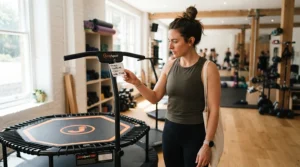
Bungee vs Spring: Benefits Over Traditional Rebounders
| Feature | Bungee Rebounders (e.g. bellicon, JumpSport, Fit Bounce Pro II) | Spring Rebounders (e.g. MaXimus PRO, HOMCOM) |
|---|---|---|
| Noise level | Quiet, suited to flats | Noticeably louder, “spring squeak” over time |
| Joint impact | Lower, smoother energy return | Firmer, snappier landing |
| Longevity | Cords individually replaceable on premium models | Springs can weaken/rust with heavy outdoor use |
| Typical price | Mid to premium | Budget to mid |
Spring or bungee rebounders both count as legitimate fitness tools, and rebound exercise as a category has been used in physical therapy and general fitness settings for decades regardless of which suspension type is underneath. What the table above doesn’t fully capture is how much the “feel” difference actually matters day to day: someone doing gentle rehab bouncing will notice the softer bungee landing immediately, while someone doing fast interval jumps may barely register the difference once they’re a few minutes into a sweaty session. If your priority is protecting ageing knees or recovering from injury, the bungee column is worth the extra spend; if you’re simply after an affordable way to move more at home, a well-built spring rebounder like the MaXimus PRO still delivers real fitness value.
Setting Up Your Rebounder: A Practical First-30-Days Guide
Getting a new rebounder home is the easy part — getting real value out of it in the first month is where most buyers either build a habit or let it gather dust in the corner.
Start by placing it on a flat, non-slip surface with at least half a metre of clearance on every side; carpeted floors are fine for most models, but check your specific rebounder’s instructions, since a few (including some HOMCOM listings) recommend a firmer surface underneath for stability. During the first week, resist the urge to jump hard — gentle “health bounces” where your feet barely leave the mat let your ankles and core adapt to the unfamiliar unstable surface before you add height or speed. Most manufacturers, including bellicon and MaXimus, recommend starting with five to ten minutes a day rather than a single long session, since the novel movement pattern fatigues stabiliser muscles faster than most people expect.
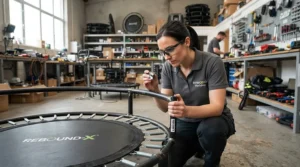
A common mistake in the first 30 days is skipping the tension check: bungee cords and springs alike settle slightly after the first dozen uses, so re-checking that everything is seated correctly (and, on bellicon models, confirming you’ve got the right bungee strength for your weight) prevents an uneven or lopsided bounce becoming your new normal. Maintenance-wise, wipe the mat down after sweaty sessions, keep it away from direct sun if stored outdoors, and inspect bungees or springs monthly for fraying or rust — catching wear early is far cheaper than replacing a whole mat assembly later.
Real-World Scenarios: Which Rebounder Fits Your Life?
Choosing between these seven models gets much easier once you stop comparing spec sheets in the abstract and start picturing your actual week.
Take a flat-dwelling professional in her thirties who wants a low-impact cardio option she can use before work without waking the neighbours below — the MaXimus Fit Bounce Pro II or bellicon Classic 44″ both fit that brief, with the deciding factor coming down to budget rather than function. Compare that with a retired couple managing joint pain who want gentle daily movement recommended by a physio, where the bellicon Premium T-Bar‘s handle support and adjustable bungee strength make it worth the higher price for genuine safety reassurance. Then there’s the budget-conscious student or young family testing whether rebounding is worth investing in long-term — for them, the HOMCOM 40″ Foldable Mini Trampoline or Kanchimi Folding Rebounder offer a sensible, low-stakes entry point that won’t sting if it ends up unused after a few months.
A fourth, often-overlooked scenario is the home-gym enthusiast who already owns dumbbells and resistance bands and wants a rebounder to slot into circuit training — here the MaXimus PRO‘s bundled accessories and firmer spring bounce genuinely suit high-intensity interval work better than the slower, more forgiving bungee lift of a bellicon.
How to Choose Between a Bellicon and a Standard Rebounder
- Assess your budget honestly — decide whether you’re spending under £100, £150-£350, or £700+, since that alone eliminates most of the guesswork.
- Check your reason for rebounding — rehab and joint pain point toward bungee models; general cardio and HIIT tolerate spring rebounders just fine.
- Measure your available space — folding designs like the Kanchimi Folding Rebounder suit small flats, while non-folding options like the JumpSport 250 need a dedicated spot.
- Confirm the weight limit — always choose a rebounder rated comfortably above your body weight for safety and bounce quality.
- Consider noise tolerance — bungee models are the clear winner for shared walls or downstairs neighbours.
- Factor in warranty and support — UK-based sellers like MaXimus Life generally offer easier after-sales support than imported models.
- Decide if you need accessories — handlebars, resistance bands and DVDs bundled with the MaXimus PRO add value if you’ll actually use them.
Bellicon Rebounder Price: What Actually Drives the Cost
The bellicon rebounder price tag regularly surprises first-time buyers, and it’s worth explaining honestly rather than just quoting a number. Current UK listings put the bellicon Classic 44″ around £700-£900, while stepped-up configurations like the bellicon Premium T-Bar push toward £950-£1,100, and fully accessorised professional setups can climb further still.
What most buyers overlook about that pricing is how much of it comes from the bungee system itself, not just branding. Each bellicon rebounder is built with weight-matched bungee cords available in five distinct strengths, individually replaceable rather than requiring a whole new mat assembly when they eventually wear — a genuine long-term cost advantage over rebounders where a failing spring means retiring the entire unit. On top of that, German manufacturing standards, a Polypropylene mat rated for sustained daily use, and a frame designed to be serviced rather than discarded all add real, verifiable cost rather than pure markup. Reviewers who’ve owned both a bellicon and a budget rebounder consistently describe the difference as most obvious after twelve months or more of use, when cheaper units start showing mat sag or spring fatigue that a bellicon simply hasn’t developed yet.
That said, honest analysis also means acknowledging the ceiling on that value proposition: someone bouncing twice a week for gentle mobility work is unlikely to notice enough day-to-day difference to justify the jump from a £300 MaXimus Fit Bounce Pro II to a £800 bellicon Classic 44″. The price is easiest to justify for daily users, rehab patients following professional advice, or anyone who’s already tried a budget rebounder and found the bounce quality limiting.
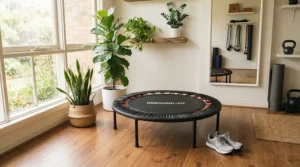
Bellicon Classic Review: Is It Worth the Investment?
Pulling together aggregated review sentiment from UK and international buyers, the bellicon Classic 44″ earns consistently strong marks for bounce quality, build durability and quietness — the three things most rebounder shoppers actually care about once the novelty of trying the category wears off.
The most frequently repeated praise centres on how the bungee suspension feels compared to anything spring-based: reviewers describe a smoother, more controlled lift that makes longer sessions feel less jarring on ankles and knees, particularly among users managing existing joint conditions or returning to exercise after injury. Here’s what to weigh against that praise: a recurring, honestly-reported criticism is the smaller usable bounce surface relative to some spring-loaded rivals of a similar overall frame diameter, which can feel restrictive for taller users or anyone doing wide lateral movements. Assembly and setup are generally described as straightforward, though a handful of reviewers note that selecting the correct bungee strength for their weight took some trial and error, especially for users sitting right at the boundary between two strength tiers.
On balance, aggregated sentiment supports the idea that the bellicon Classic 44″ delivers on its premium positioning for the specific audience it’s built for — regular, long-term users prioritising joint comfort and quiet operation — while being genuinely poor value for anyone who’ll use it only occasionally or who hasn’t yet confirmed they enjoy rebounding as a workout format.
Common Mistakes When Buying a Rebounder
Choosing based on frame diameter alone is one of the most common errors — a wider frame doesn’t automatically mean a wider bounce surface, since bungee and spring set-ups eat into usable mat space differently. Another frequent misstep is ignoring weight limits until after purchase, only to find the bounce feels dead or overly firm because the unit is rated too close to the user’s actual body weight. Buyers also regularly skip checking noise levels before committing, which becomes a real problem in flats or houses with shared walls once a spring rebounder turns out louder than expected. Finally, plenty of first-time buyers assume all rebounders are functionally interchangeable and default to the cheapest option, only to abandon rebounding altogether after a few frustrating, overly bouncy or achingly loud sessions — when a slightly better-built budget model might have kept them motivated.
Long-Term Cost & Maintenance: What You’re Really Paying For
Total cost of ownership looks very different once you stop comparing sticker prices in isolation. A HOMCOM 40″ Foldable Mini Trampoline costing under £50 might need replacing within a year or two of regular use, effectively costing £25-£50 annually if you keep rebuying budget units. A MaXimus Fit Bounce Pro II at roughly £300, backed by a three-year mat warranty, spreads that cost to around £100 a year across its guaranteed lifespan — and likely longer in practice. The bellicon Classic 44″, at £700-£900, looks expensive upfront but with individually replaceable bungee cords and a frame built for years of daily use, the annualised cost over a five-to-ten-year lifespan can undercut repeatedly replacing cheaper units.
Maintenance costs matter too: bungee cords on premium models are sold as replacement parts rather than requiring a full rebuild, while spring-based budget rebounders often can’t be economically repaired once a spring weakens or a mat tears, pushing owners toward full replacement instead.
Safety, Regulations & Compliance Guide
Fitness rebounders sit slightly outside the domestic trampoline safety standard most people have heard of — Suffolk Trading Standards notes that BS EN 71-14 covers home trampolines but specifically excludes fitness trampolines, which fall under general product safety and CE/UKCA marking requirements instead. In practice, that means it’s worth checking that any rebounder you buy carries UKCA or CE marking, comes with clear maximum weight guidance, and includes assembly instructions and safety warnings rather than assuming fitness-specific safety testing is identical across every listing.
Sensible household precautions still apply regardless of suspension type: use one person at a time, keep the area clear of furniture and low ceilings, empty pockets before bouncing, and supervise children closely, since fitness rebounders aren’t designed with the same enclosure and netting expectations as garden trampolines. If you’re managing a joint condition, osteoporosis, or recovering from injury, it’s worth a quick conversation with a GP or physiotherapist before starting, particularly if you’re choosing a higher-tension bungee strength or a firmer spring model.
Features That Actually Matter (And Those That Don’t)
Weight-matched bungee strength, individually replaceable cords, and a genuinely stable frame are the features worth paying for — they directly affect bounce quality, safety and longevity. Bundled DVDs and online workout memberships, by contrast, are nice-to-haves rather than genuine differentiators, since free workout content is widely available online regardless of which rebounder you buy. Folding mechanisms matter enormously if you live in a small flat and barely at all if you have a dedicated home gym space, so don’t pay a premium for portability you won’t use. Colour options and cosmetic branding, unsurprisingly, matter not at all to how the rebounder actually performs — treat them purely as a personal preference, not a buying criterion.
Frequently Asked Questions
❓ Is a bellicon rebounder worth the extra money over a standard rebounder?
❓ What is the bellicon rebounder price range in the UK?
❓ Is a spring or bungee rebounder better for beginners?
❓ How long does a standard rebounder typically last?
❓ Can a bellicon Classic review help me choose the right bungee strength?
Conclusion
The bellicon vs standard rebounder debate isn’t really a debate once you match the rebounder to how you’ll actually use it. Serious, daily users chasing joint-friendly, quiet, long-lasting equipment will get genuine value from the bellicon Classic 44″ or bellicon Premium T-Bar, even at a premium price, because the bungee system and rebuildable design earn their keep over years of use. Buyers wanting strong bungee performance without the four-figure spend should look hard at the JumpSport 250 or MaXimus Fit Bounce Pro II, both of which borrow enough of bellicon’s approach to satisfy most home users. And for anyone still deciding whether rebounding deserves a permanent spot in their routine, starting with the MaXimus PRO, Kanchimi Folding Rebounder or HOMCOM 40″ Foldable Mini Trampoline lets you test the format honestly before committing serious money. Whichever you choose, consistency matters more than the price tag — the best rebounder is the one you’ll actually step onto three or four times a week.
Recommended for You
- Silent Bungee Rebounder: 7 Best Quiet Picks For UK Flats (2026)
- Rebounder With Handle Bar: 7 Best Picks For UK Homes (2026)
- Best Rebounder for Elderly: 7 Safest Picks for UK Homes (2026)
Disclaimer: This article contains affiliate links. As an Amazon Associate, I earn from qualifying purchases. If you purchase products through these links, we may earn a small commission at no additional cost to you.
✨ Found this helpful? Share it with your friends! 💬🤗
